
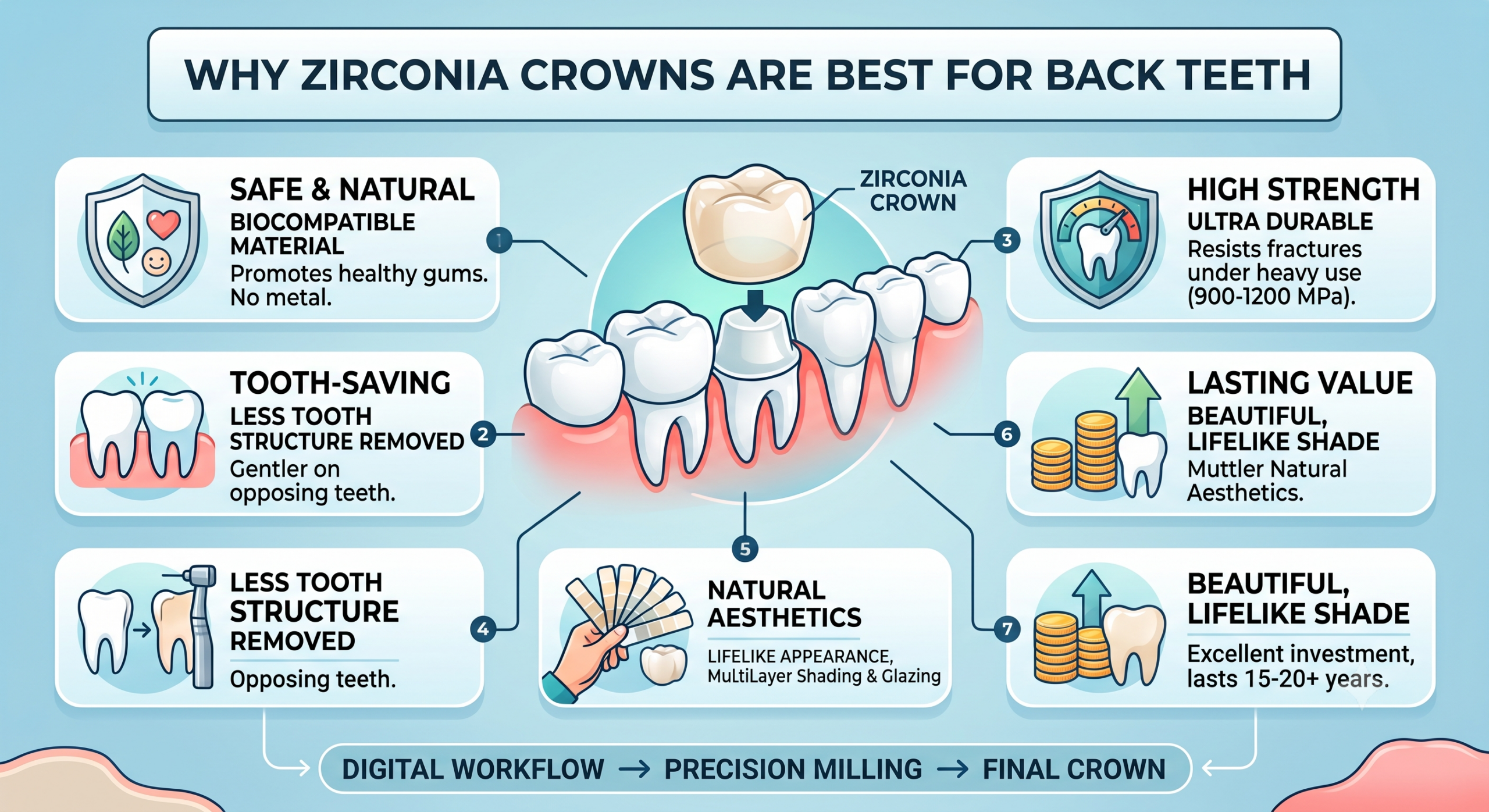
If you’ve ever cracked a filling on a piece of hard candy or worried about a molar that just won’t hold up, you’re not alone. Zirconia crowns have quietly become one of dentistry’s most trusted solutions for restoring back teeth, and there’s good reason for that. This material combines the kind of brute strength your molars need with an appearance that doesn’t scream “dental work.”
What Are Zirconia Crowns?
Zirconia crowns are dental restorations made from zirconium dioxide, a biocompatible ceramic material that’s actually a cousin of the metal zirconium. Don’t let the “ceramic” label fool you, though. This isn’t the fragile porcelain you might picture from an old teacup. Zirconia is engineered specifically for load-bearing applications, which is exactly why it’s found a home in the back of your mouth where chewing forces are highest.
Dentists have been using zirconia in various forms since the early 2000s, but improvements in milling technology and material science have made it far more versatile over the past decade. Today’s zirconia crowns are fabricated using CAD/CAM technology, short for computer-aided design and computer-aided manufacturing. A digital scanner captures the shape of your prepared tooth, and that data guides a milling machine that carves the crown with remarkable precision.
The Science Behind Zirconia’s Strength
Zirconia’s strength starts at the chemical level. Pure zirconium dioxide is naturally unstable and prone to cracking as it shifts between different crystal phases, so manufacturers stabilize it with a small amount of yttrium oxide, often written as yttria. This creates yttria-stabilized zirconia, or YSZ, the form used in nearly every dental crown on the market today.
That stabilization matters because zirconia’s crystal structure can shift between three phases: monoclinic, tetragonal, and cubic. When a stabilized zirconia crown is placed under stress, such as a heavy bite, tiny areas near a developing crack transform from the tetragonal phase to the monoclinic phase. This transformation actually expands slightly and squeezes the crack shut before it can spread. Materials scientists call this transformation toughening, and it’s the real mechanism behind zirconia’s reputation for durability.
Flexural strength measurements back this up. Zirconia typically tests between 900 and 1,200 megapascals (MPa), compared to roughly 400 MPa for lithium disilicate, better known by the brand name E.max, and even less for traditional feldspathic porcelain. In plain terms, zirconia can absorb significantly more force before it fails.
Yttria-stabilized zirconia also resists a known weak point in older ceramic materials called low-temperature degradation. This is a slow, moisture-driven breakdown that can weaken some ceramics over years of use in the mouth. Modern dental zirconia formulations are specifically engineered to resist this aging process, which is part of why today’s crowns hold up so well over the long haul.
Monolithic vs. Layered Zirconia
There are two main approaches to zirconia crown fabrication:
- Monolithic zirconia: The entire crown is milled from a single block of zirconia, then stained and glazed for a natural look. This version is the strongest option and is often the go-to choice for posterior teeth.
- Layered zirconia: A zirconia core is milled, then a porcelain layer is fused over the top for enhanced aesthetics. This approach is more common for front teeth, where appearance takes priority, but it does reduce overall strength since porcelain is more brittle than zirconia itself.
Within monolithic zirconia, dentists and lab technicians also choose between different material grades. 3Y-TZP, meaning zirconia stabilized with about 3 mole percent yttria, delivers the highest strength and is a favorite for molars. 5Y-TZP contains more yttria, which trades a bit of strength for noticeably better translucency, making it a popular pick when a crown needs to blend in on a more visible premolar. Many labs now also use multilayer zirconia blocks, which gradually shift shade and translucency from the gumline to the biting edge within a single puck, giving even a single-material crown a more lifelike appearance.
For molars, most dentists will recommend 3Y-TZP monolithic zirconia because durability matters more than translucency back there.
Why Posterior Teeth Need Special Consideration
Not all teeth face the same daily grind, literally. Your posterior teeth, meaning your premolars and molars, do the heavy lifting when it comes to chewing.
The Unique Demands of Molars and Premolars
Molars can experience bite forces of up to 200 pounds per square inch during normal chewing, and that number climbs even higher for people with bruxism, a condition involving chronic teeth grinding or clenching, often during sleep. Compare that to front teeth, which mostly handle biting and tearing rather than grinding and crushing.
This is why material selection matters so much for back teeth restorations. A crown that looks gorgeous but chips under pressure isn’t doing you any favors if it’s sitting on a molar. Posterior teeth need a material that can take a beating day after day without cracking, wearing down prematurely, or dislodging.
7 Reasons Zirconia Crowns Excel for Back Teeth
Let’s get into the specifics of why zirconia has become the go-to recommendation for molar and premolar restorations.
1. Exceptional Fracture Resistance
Thanks to transformation toughening, zirconia crowns are remarkably resistant to chipping and fracturing. This matters enormously for posterior teeth, which absorb the brunt of chewing forces. Patients with bruxism often benefit the most from zirconia’s fracture-resistant nature, especially when paired with a nightguard to reduce nighttime clenching forces.
2. Superior Wear Characteristics
Older generations of zirconia had a reputation for being tough on opposing natural teeth, essentially wearing them down over time. Fortunately, modern polishing and sintering techniques have largely solved this issue. Well-polished zirconia crowns now demonstrate wear patterns comparable to natural enamel, meaning your opposing teeth stay protected too.
3. Biocompatibility and Gum Health
Zirconia is inert and doesn’t trigger the kind of inflammatory response that some metal alloys can cause. Gum tissue tends to respond favorably to zirconia restorations, and many patients notice healthier-looking gum lines around zirconia crowns compared to older metal-based options.
4. Minimal Tooth Reduction Required
Because zirconia is so strong, crowns can be milled thinner than some alternatives while still holding up to daily use. That means your dentist may need to remove less of your natural tooth structure during preparation, which is always a win when it comes to preserving what you were born with. Precise margin design during preparation also helps the final crown seat with a tight marginal fit, which protects the tooth underneath from decay at the crown’s edge.
5. Natural Aesthetics Without Sacrificing Strength
While front teeth typically call for layered zirconia or 5Y-TZP for higher translucency, today’s monolithic zirconia has improved considerably in the looks department. Modern shading, multilayer blocks, and glazing techniques allow zirconia crowns to blend in convincingly, even on visible premolars.
6. Long-Term Cost Effectiveness
Yes, zirconia crowns can carry a higher upfront cost than some alternatives. But when you factor in their durability, the story changes. Fewer replacements, fewer emergency repairs, and less risk of fracture add up to genuine savings over the life of the restoration.
| Factor | Zirconia | PFM | E.max | Full-Cast Gold |
| Average lifespan | 15-20+ years | 10-15 years | 10-15 years | 20+ years |
| Fracture risk | Very low | Moderate | Moderate | Very low |
| Aesthetics | Good to excellent | Good | Excellent | Poor (metallic) |
| Replacement frequency | Low | Moderate | Moderate | Low |
7. Metal-Free, Allergy-Friendly Design
For patients with metal sensitivities, zirconia offers real peace of mind. There’s no metal substructure to trigger allergic reactions or cause the dreaded gray line that sometimes appears at the gumline with porcelain fused to metal crowns.
Zirconia vs. Other Crown Materials
It helps to see how zirconia measures up against the competition.
Zirconia vs. Porcelain Fused to Metal (PFM)
PFM crowns have been a dental workhorse for decades, and they’re still a solid option. However, they come with tradeoffs. The metal substructure can eventually show through at the gumline, and the porcelain layer is prone to chipping in a way that monolithic zirconia simply isn’t. Zirconia also skips the metal allergy concern entirely.
Zirconia vs. All-Ceramic (E.max)
E.max, made from lithium disilicate, is prized for its beautiful translucency and is often the top pick for front teeth. But when it comes to raw strength, zirconia has the edge, particularly for patients with heavy bites or bruxism. Many dentists reserve E.max for anterior teeth and lean on zirconia when durability is the priority.
Zirconia vs. Full-Cast Gold
Full-cast gold crowns are the old guard of posterior restorations, and in fairness, they’re extremely durable and kind to opposing teeth. Where gold falls short is aesthetics. Most patients today prefer a tooth-colored option, and that’s where zirconia has largely taken over as the modern equivalent, offering comparable strength without the metallic appearance.
The Zirconia Crown Procedure: What to Expect
Getting a zirconia crown is a fairly straightforward process, especially with today’s digital tools.
Preparation and Digital Scanning
Your dentist will first numb the area and gently reshape the tooth to make room for the crown, following a margin design that balances strength with conservative tooth reduction. Rather than the old-fashioned goopy impression material, many practices now use digital intraoral scanners to capture a precise 3D model of your tooth.
Fabrication and Milling
That digital scan gets sent to a milling machine, which carves the crown from a pre-sintered zirconia block. The milled crown is then placed in a specialized furnace for sintering, a high-heat process that shrinks and hardens the material into its final, full-strength state. Depending on your dentist’s setup, this can happen chairside in a single visit or at an off-site lab, which typically takes one to two weeks. If your crown is being made off-site, you’ll usually wear a temporary crown to protect the prepared tooth in the meantime.
Placement and Bite Adjustment
Once your crown is ready, your dentist, often a general dentist or a prosthodontist who specializes in crown and bridge work, will check the fit, color match, and marginal fit before permanently securing it in place, typically with a resin cement designed to bond well with zirconia. A few minor adjustments to your occlusion, meaning how your teeth come together when you bite down, are normal to make sure everything feels comfortable.
Caring for Your Zirconia Crown
Good news: zirconia crowns don’t require any special maintenance beyond standard oral hygiene. That said, a few habits will help your crown go the distance:
- Brush twice daily with a soft-bristled toothbrush
- Floss gently around the crown margins daily
- Avoid using your teeth to open packages or crack nuts
- Wear a nightguard if you have bruxism
- Keep up with regular dental checkups
Who Is a Good Candidate for Zirconia Crowns?
Zirconia crowns tend to be an excellent fit for the following:
- Patients needing restorations on molars or premolars
- Those with bruxism or heavy biting forces
- People with metal allergies or sensitivities
- Anyone looking for a long-lasting, low-maintenance restoration
- Patients wanting a metal-free treatment option
Your dentist will evaluate your bite, the condition of the tooth in question, and your overall oral health before recommending zirconia specifically.
Potential Drawbacks to Consider
Zirconia isn’t necessarily the perfect choice for every situation. A few things worth knowing:
- Older, less polished zirconia could wear opposing teeth, though this is largely resolved with modern sintering and polishing methods
- Layered zirconia can chip at the porcelain veneer, even though the zirconia core itself is strong
- Cost may be higher upfront compared to some traditional materials
- Extremely high translucency requirements for front teeth are sometimes better served by 5Y-TZP or other ceramics
Frequently Asked Questions
1. How long do zirconia crowns typically last?
With proper care, zirconia crowns often last 15 to 20 years or longer, making them one of the most durable options available for posterior restorations.
2. Are zirconia crowns noticeably different from natural teeth?
Not usually. Modern staining, multilayer blocks, and glazing techniques allow zirconia crowns to closely match the shade and translucency of surrounding teeth, especially on back teeth where high translucency matters less.
3. Do zirconia crowns require a root canal first?
Not necessarily. A crown may be recommended for a variety of reasons, including large fillings, cracked teeth, or after a root canal, but the crown itself doesn’t require one.
4. Can zirconia crowns cause allergic reactions?
Zirconia is considered highly biocompatible and metal-free, so allergic reactions are extremely rare compared to some metal-containing restorations.
5. Is the procedure for getting a zirconia crown painful?
Most patients report minimal discomfort. The area is numbed during preparation, and any soreness afterward is usually mild and temporary.
6. How much do zirconia crowns cost?
Costs vary by location and case complexity, but zirconia crowns generally range from moderate to premium pricing compared to other crown materials, reflecting their durability and longevity.
7. Can zirconia crowns be whitened?
No, zirconia crowns don’t respond to whitening treatments the way natural teeth do. It’s best to complete any whitening before your crown is fabricated so your dentist can match the shade accurately.
Conclusion
Zirconia crowns have earned their reputation as the gold standard for posterior teeth, and it’s not hard to see why. Between the science of yttria stabilization and transformation toughening, exceptional biocompatibility, and steadily improving aesthetics through multilayer blocks and refined sintering, they check nearly every box dentists look for when restoring a molar or premolar. If you’re facing a crown recommendation for a back tooth, it’s well worth asking your dentist or prosthodontist whether zirconia is the right fit for your specific situation.